Welcome Crop needed generation from a roof it already had. EcoSoch designed, installed and commissioned a grid-tied solar plant across the full length of it — and it has held its output ever since.
The project
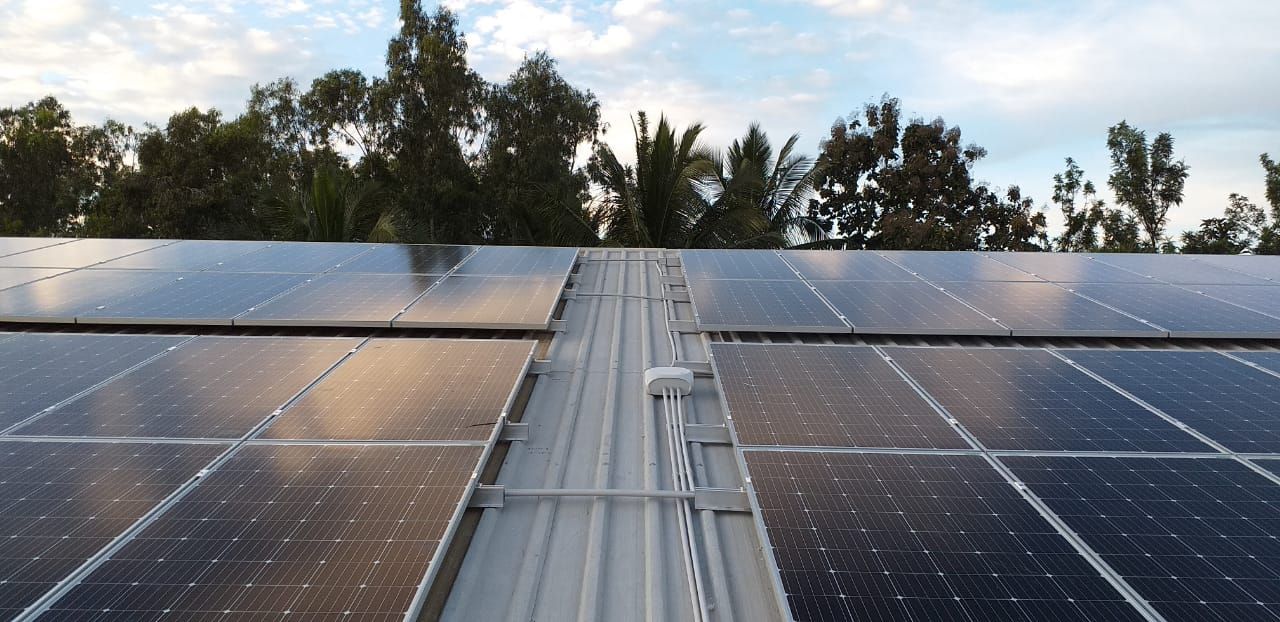
Welcome Crop operates from a manufacturing unit in the KIADB Industrial Area at Doddaballapura, on the northern edge of Bangalore Rural district. The building came with what most industrial buildings come with: a long, unshaded, gently pitched metal-sheet roof doing nothing.
EcoSoch designed, supplied and commissioned a 30.34 kWp grid-tied plant across it — 82 modules, module-level power electronics, and a net-metered connection to the state grid. The plant now averages 107 kWh a day over its lifetime.
| Customer | Welcome Crop |
| Capacity | 30.34 kWp |
| Location | #48/1, 13th Cross, Veerapura Post, KIADB Industrial Area, Doddaballapura, Bangalore Rural District, Karnataka 561203 |
| Coordinates | 13.2448044, 77.555783 |
| Modules | 82 × Waaree 370 Wp monocrystalline, 72-cell |
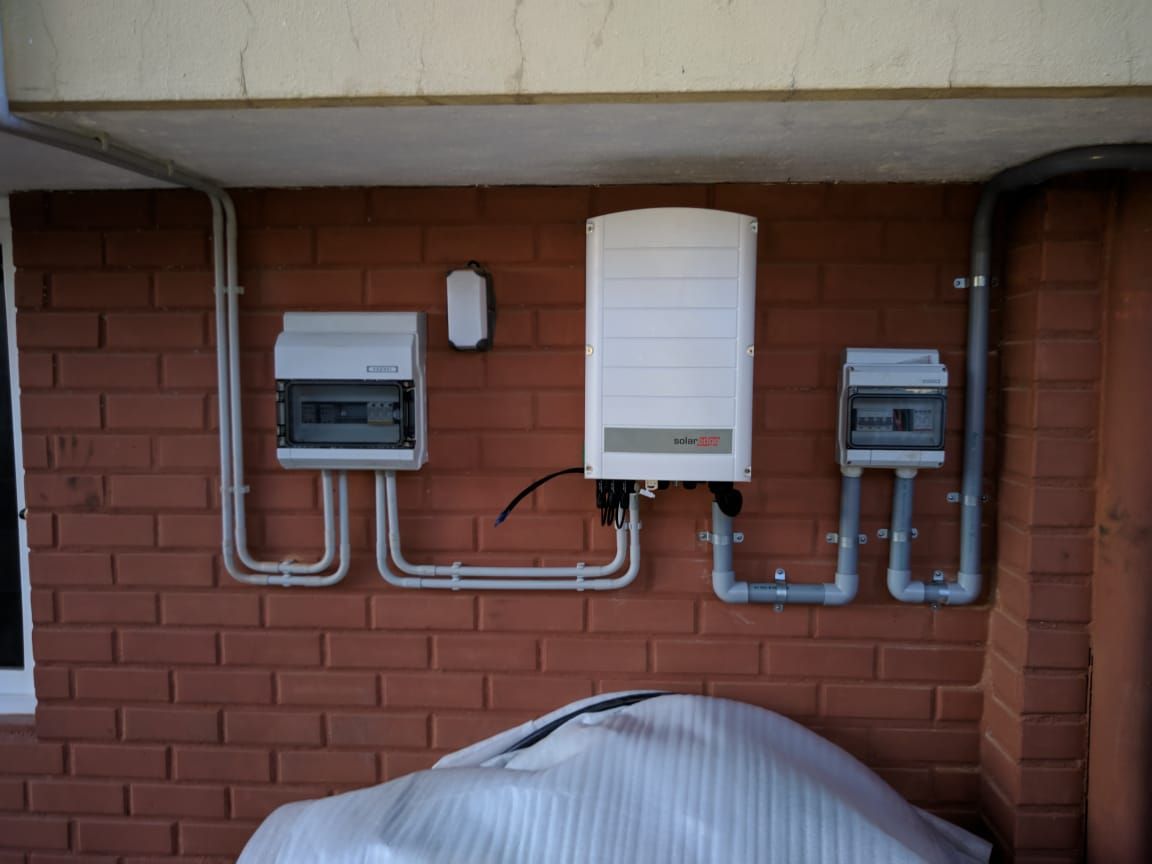
| Inverter | 1 × SolarEdge 27.6 kVA on-grid string inverter |
| Optimizers | 41 × SolarEdge P730, one per two modules |
| Mounting | Aluminium rail-and-clamp on metal sheet roof |
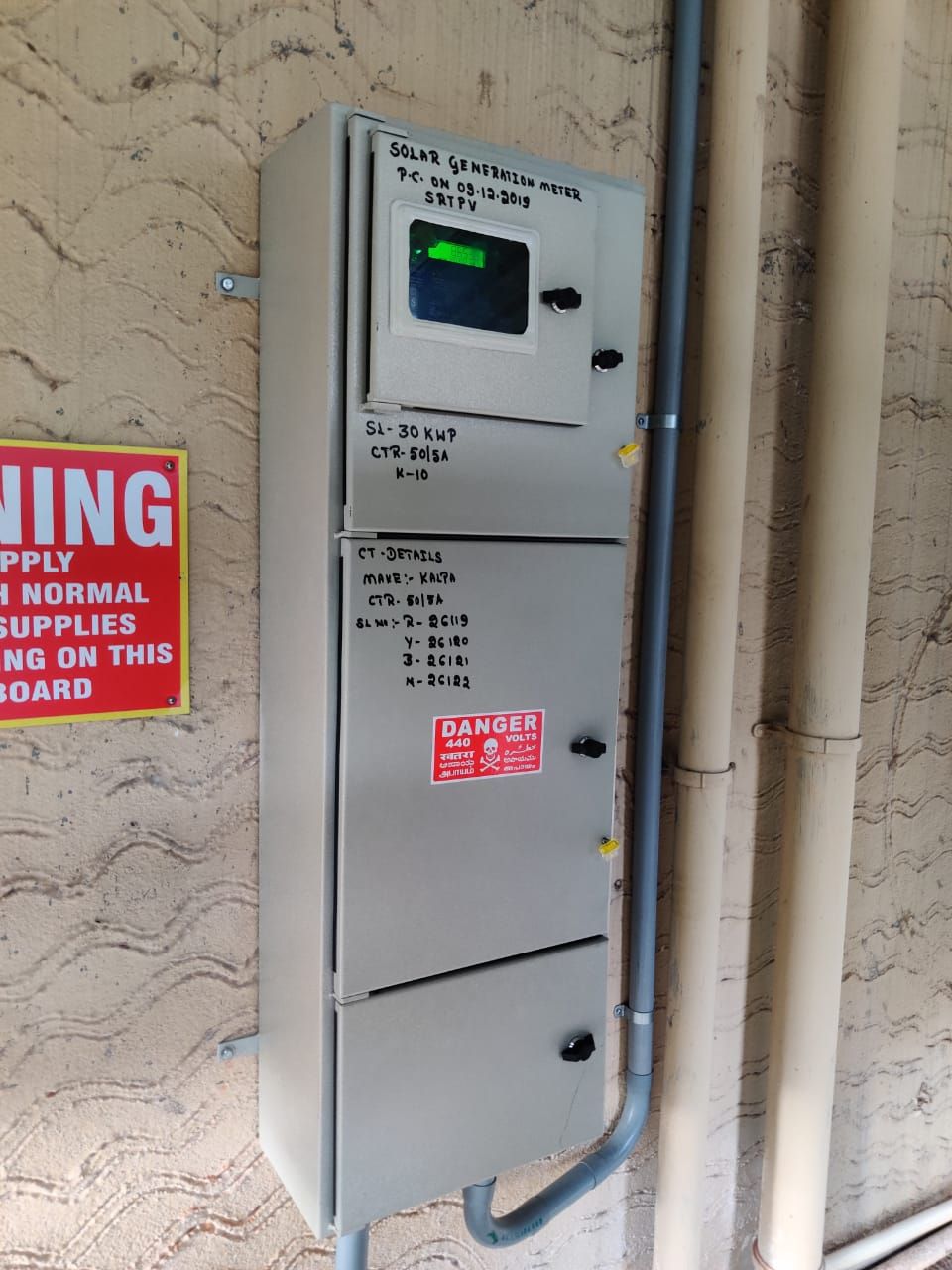
| Metering | Bidirectional net metering with a dedicated generation meter |
System design
Three decisions shape everything downstream: the module, the inverter, and whether power electronics sit at string level or module level.
Monocrystalline, 72-cell. Eighty-two of them at 370 Wp gives exactly 30.34 kWp of DC capacity.
A single on-grid string inverter converting DC to grid-synchronised AC. A DC-to-AC ratio of 1.10 keeps the inverter working near its efficient band for most of the day.
One per pair of modules, giving maximum power point tracking at module level rather than string level.
With string-level tracking, one shaded or soiled module drags the whole string down with it. With optimizers, it drags down only itself. On a long industrial roof where soiling is uneven and a single vent or cable tray can throw a shadow, that difference shows up in the annual yield. It also makes every module individually visible in monitoring, so an underperforming panel can be found from a desk rather than by walking the roof.
Single-line arrangement
Installation
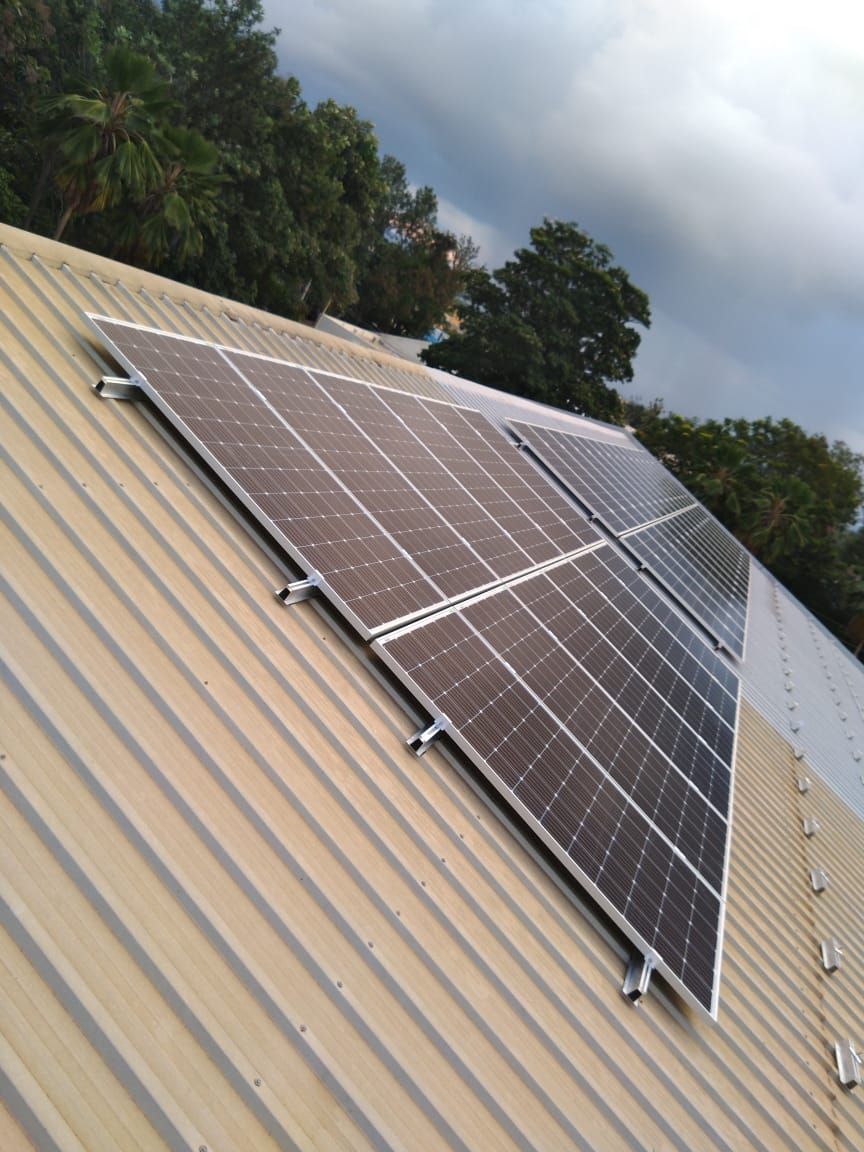
Aluminium mounting rails and module clamps were laid out across the full length of the metal-sheet roof, following its natural slope.
Working with the existing pitch rather than tilting against it keeps the structure low, preserves the maximum usable array area, and avoids the self-shading that raised tilt frames create once rows are packed close together. Rows were aligned to the ridge, and clamp positions set to spread load across the sheet profile rather than concentrate it on a few points.
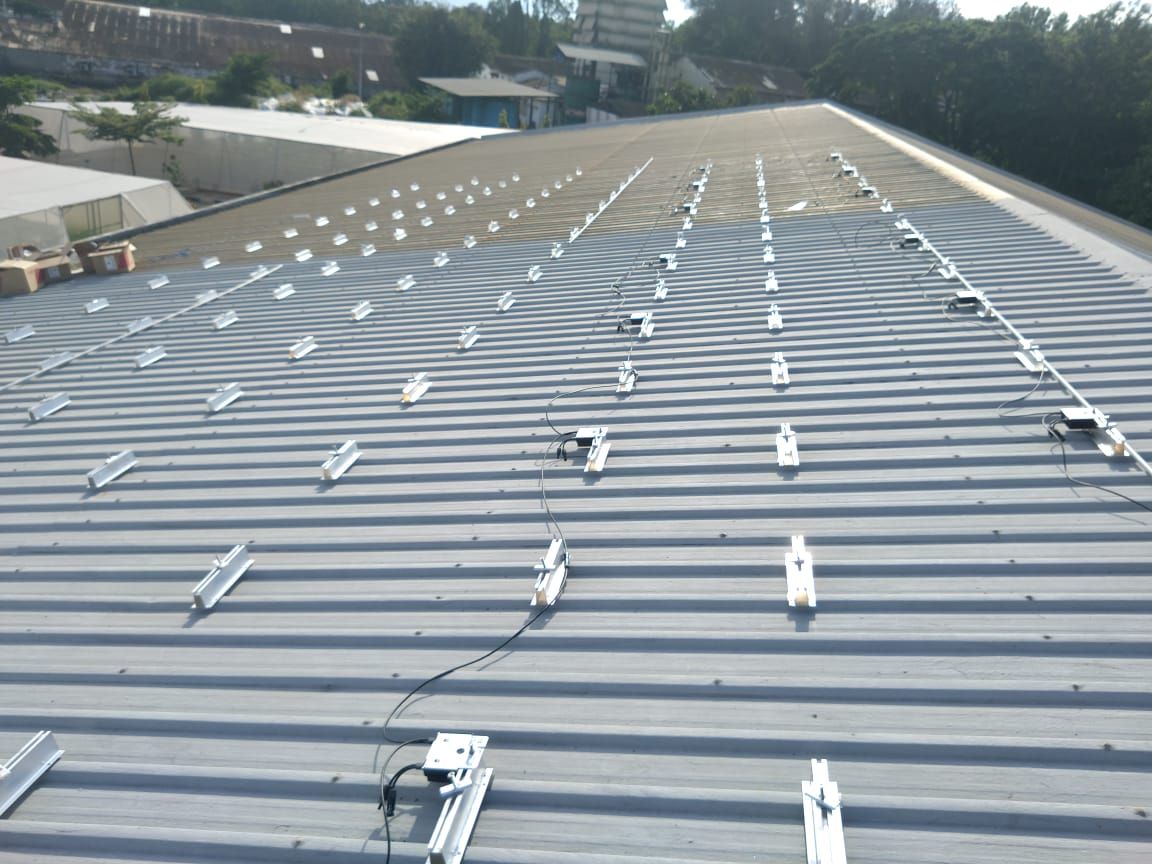
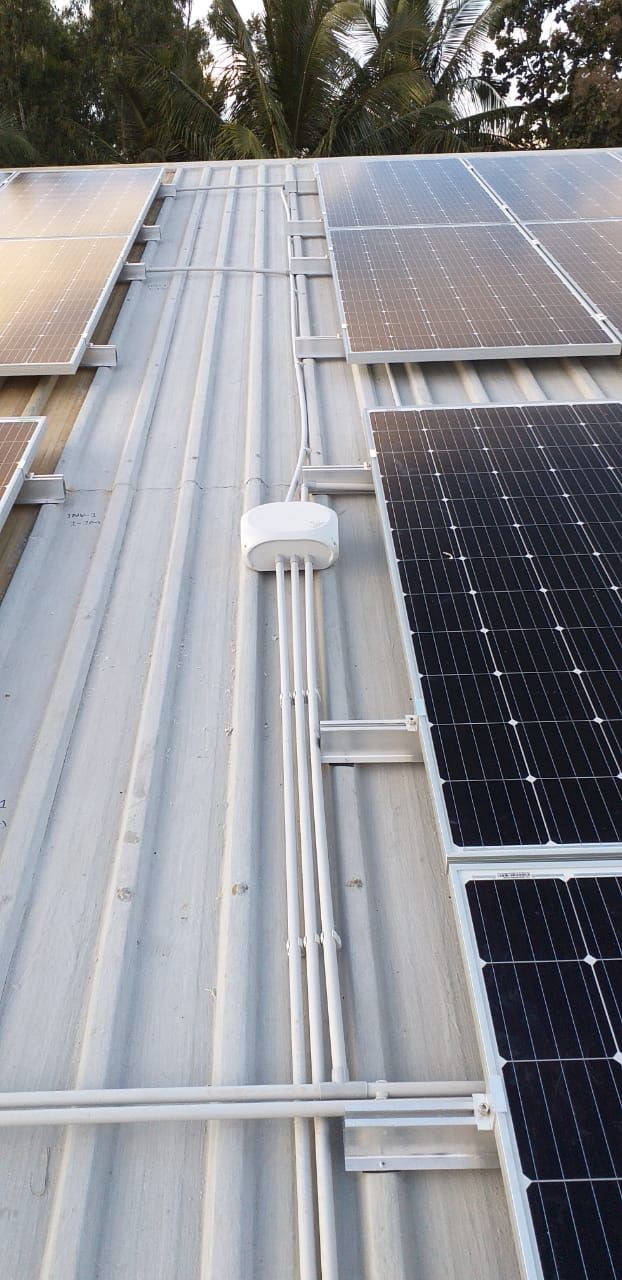
Cabling was routed through weatherproof conduit along the ridge line into a central junction box. Short runs reduce DC losses; conduit keeps the wiring off the roof surface where water collects and debris gathers; and running it along the ridge means the whole length can be inspected without lifting a single module.
Grid integration
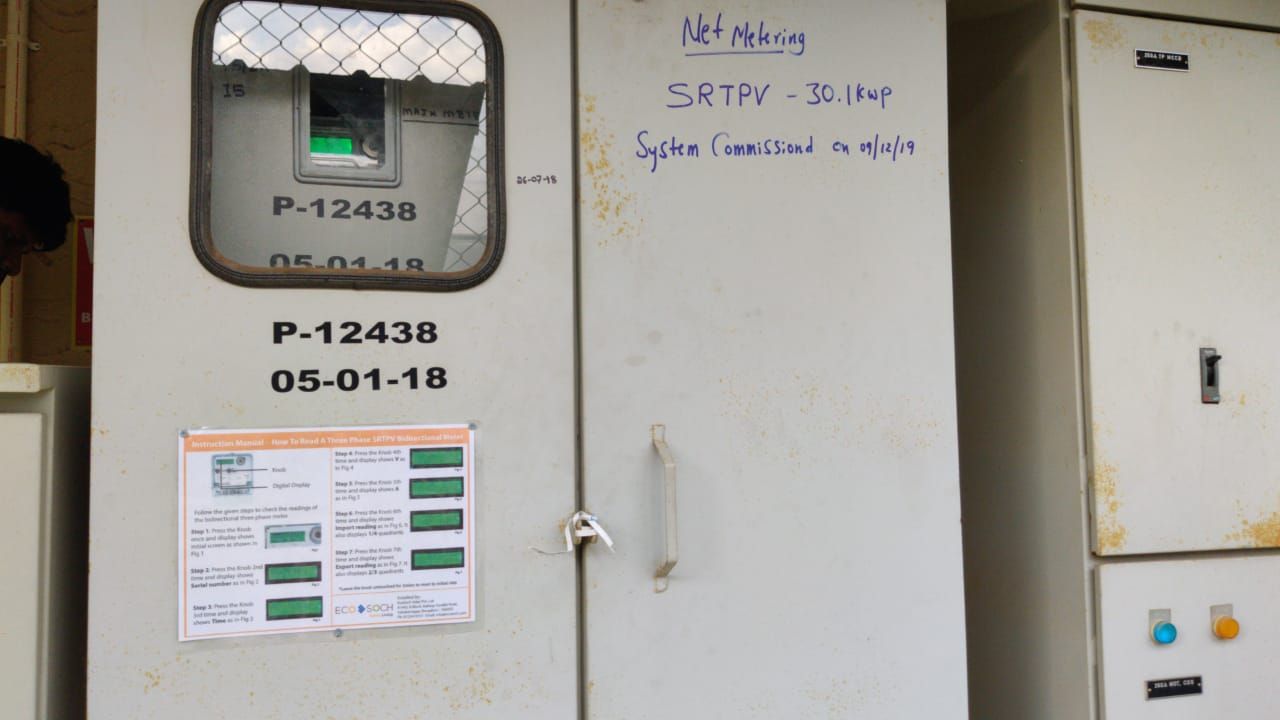
The plant was grid-connected under the state net-metering framework, with a bidirectional meter recording import and export separately and a dedicated meter recording generation.
Performance
Three averages, taken from the plant's own generation meter.
Average daily generation · kWh
Outcome
EcoSoch delivered the complete solution — racking, module installation, DC and AC works, inverter commissioning and net-metering integration — engineered for dependable long-term generation on an industrial roof.
The result is a 30.34 kWp asset feeding the site and the grid consistently since commissioning, with module-level monitoring in place so that performance can be verified rather than assumed.